


Is there anything more intriguing than tales of murder? What is it with the human obsession with death? We grow up watching our favorite crime-solving talking dog, we watch grisly true crimes late into the night, and spend game nights firing accusations at our friends in a round of Clue. Maybe murder mysteries could offer some insight into our obsession with crime.
Murder mysteries are a timeless trope that has infected all media, from movies to board games. They are distinguished by a crime, usually murder, by potential suspects, and by a main character working to find the perpetrator. Who-dun-its have a way of captivating the audience’s attention.
The genre is largely agreed to have gotten its start in the mid-1800s with detective short stories like Edgar Allan Poe’s “The Murders of Rue Morgue” and novels such as Wilkie Collins’s The Moonstone. These stories set the basis for many now-expected tropes, like a highly intelligent main character using logic to catch the killer, red herrings, inside jobs, many false suspects, and a final twist. These and many similar detective novels grew in popularity alongside dime novels, cheap paperbacks sold widely at the time.

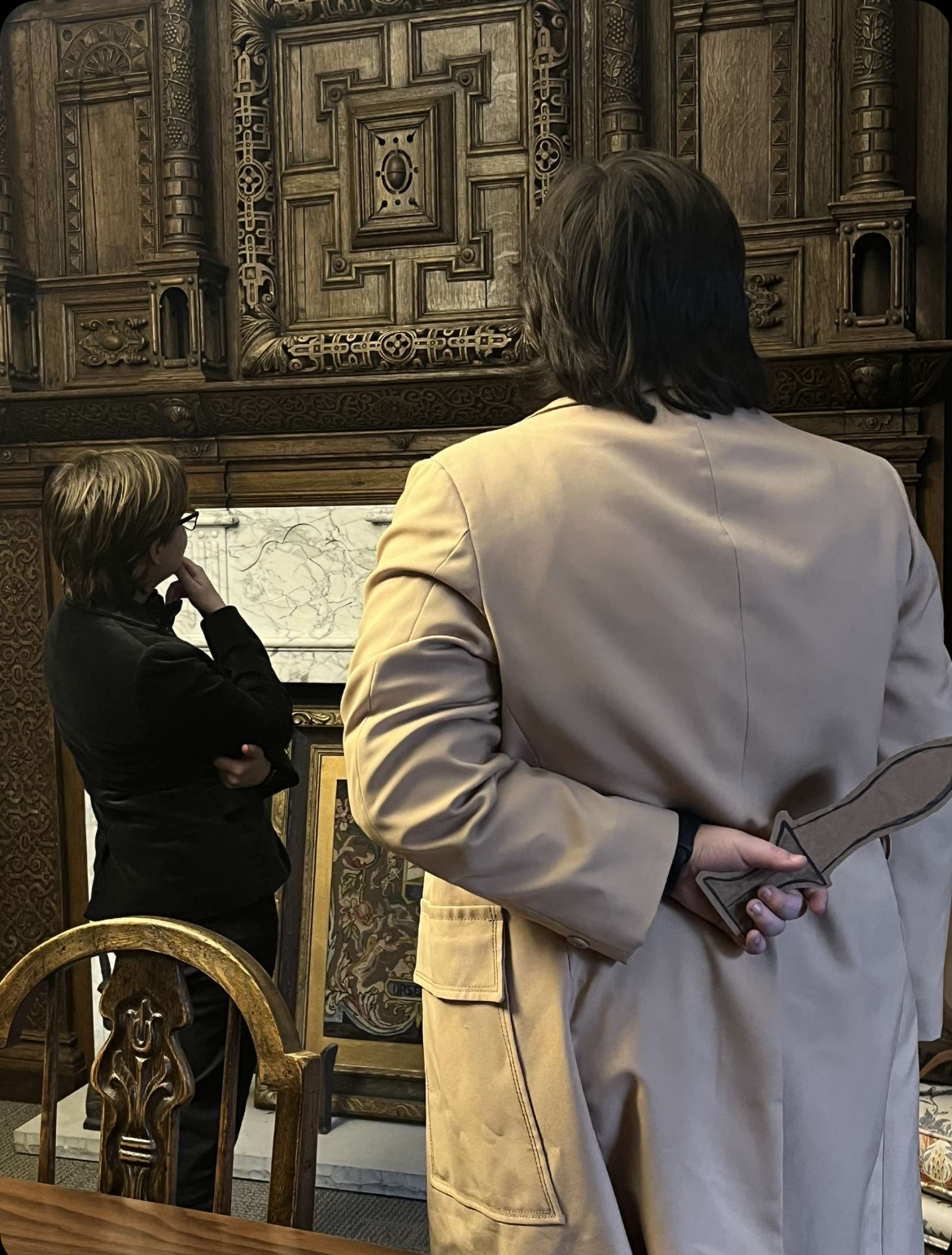
The golden age of detective fiction, the genre most linked to murder mysteries, gripped Western culture around the 1920s and 1930s with authors like Dorothy L. Sayers and Agatha Christie leading the charge. Though the general basis of these stories remains the same, they still have been successful at adapting to modern times. There has been a stream of successful murder mystery films in the past few years, including Knives Out (2019), Glass Onion (2022), Murder on the Orient Express (2017), and Death on the Nile (2022). With the relaxation in censorship in the past hundred years, many of these films have become more gory, violent, and unafraid to get deeper into the mindset of the murderer. Recently, many of the main detective characters have no connection to the police, likely in the wake of police force controversy.
These stories can be told through any genre, but some of the common genres include historical, contemporary, noir, neo-noir, giallo, true crime, cozy mystery, or comedy. There is a Who-Dun-It for everyone. But that doesn’t answer the question of why Western culture is so obsessed with murder. To answer that question, we might have to dissect the human mind itself.
Humans are naturally interested in crime. Knowing where there is danger is vital to our survival, but why would we willingly seek that anxiety? One theory goes back to ancient Greece. Aristotle claimed in his Poetics that fear-causing media purged fear from us. His theory of catharsis claims that there is pleasure in viewing tragedy by having the chance to experience fear and pity without actually being in danger. There is no question that Who-Dun-Its have the capacity to give us all a hit of fear. The suspense can be fierce, especially in violence-oriented mysteries. Emotionally intense stories were found to correspond to a heightened heart rate and higher activity in the thalamus and amygdala, according to a peer-reviewed study done by Aarhus University. Suspenseful media can activate our brains the same way real-world suspense would, so it can lead to a heightened heart rate, pain relief, and forgetting about your real-world anxieties because you’re engrossed by the tragedy on the screen (or page). Dark disturbing topics in media like murder and betrayal can do wonders for emotional regulation if you can stomach the blood. That is why humans are so drawn to brutal topics, but there is still one more aspect of murder mysteries that allows them to stab their way into people’s hearts.
The allure of mysteries is undeniable. Humans naturally hunt answers to mysteries, hence why cliffhangers are so effective. There is a certain kick of satisfaction one can get from solving the mystery. This is one of the reasons the mystery genre is so compelling: audiences are guaranteed a mystery and then, in most cases, a solution. There is a lot that the mystery genre offers that other genres simply don’t. For example, there is inherently more audience participation through guessing and personally trying to solve the puzzle. Readers and watchers pay more attention to the small details, and the characters are more important and are seen on a deeper level because anyone could be a suspect. There is an assured positive (killer being caught) ending and a eureka moment where it all connects. It’s a formula that keeps people coming back for more.
These tales of gore, horror, and betrayal have kept audiences in their grasp for centuries. They are the perfect recipe for a killer good time, whether one is in it for the mystery, the drama, or the rush of suspense. As certain as death, murder mysteries will continue being told in new captivating ways that keep people on the edge of their seats until the very last word.