


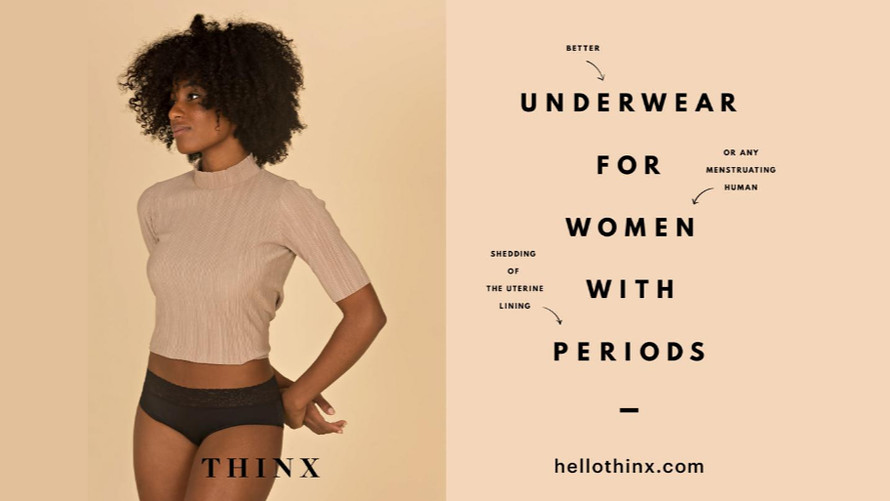
In a world where women’s bodily autonomy is a constant topic of political debate, access to feminine hygiene products is pricey and sometimes even completely unattainable, it has become glaringly obvious that reproductive health is under great threat. This point was proven once again in January 2023 with the announcement of a class action lawsuit against period underwear company Thinx, citing dangerous levels of toxic chemicals in their products.
The brand touted as an organic and sustainable alternative meant to “absorb period worries” was launched in 2013, quickly being distributed through many common retailers such as Walmart, CVS, and Target. The company fell under intense scrutiny late last year as testing of their product through a third-party laboratory revealed the presence of PFAS, a man-made chemical known to cause birth defects and reproductive harm.
The lawsuit, Dickens v. Thinx, Inc. filed in May of last year states “Through its uniform, widespread, nationwide advertising campaign, [Thinx] has led consumers to believe that Thinx Underwear is a safe, healthy and sustainable choice for women and that it is free of harmful chemicals,” and “In reality, Thinx Underwear contains harmful chemicals … which are a safety hazard to the female body and the environment.”
The company has agreed to a five million dollar settlement but claims this action was not an admission of guilt with one spokesperson stating in an email to NPR that “We take customer health and product safety seriously,” and “We can confirm that PFAS have never been part of our product design. We will continue to take measures to help ensure that PFAS are not added to our products.” As a follow-up to the lawsuit, anyone who bought Thinx underwear between Nov. 12, 2016, and Nov. 28, 2022, can submit a claim online before mid-April to receive a cash reimbursement.
Ultimately, though the company has made explicitly clear the inclusion of these chemicals in their products was unintentional and will be carefully avoided in the future, the whole ordeal has left consumers wondering just what brands they can trust.